- Apr 6
Suppressing your Anger will Kill You. Here’s How to Transmute it instead.
For us women, anger is something we’re taught to cast aside.
We were taught that the “angry” version of ourselves was the bad one. That as long as we compromised to keep everyone else comfortable, we would be “safe.”
As we’ve started reparenting ourselves, we grown to know that anger isn’t bad. We know we need to heal to break the cycle and become empowered, confident, and fully-embodied.
But knowing isn’t enough.
We can feel that anger is a crucial part of thriving, yet we still feel the urge to stifle it and hide it away. It gathers dust in our internal backrooms, not because we hate ourselves, but because it confuses and intimidates our domesticated outer selves.
A deep, survival-based part of us fears that if we start listening to our anger, we can never shrink back into the box. This instinct keeps us “safe,” and so we choose to stay comfortable, even if it means breaking ourselves to fit, and even if we consciously know that leaving that cold, dark box is the only thing that will truly make us free.
“Humans want to feel comfortable more than they want to be happy.”
Brianna Wiest
So, let’s answer the question once and for all:
What is your anger really telling you? And how can you use it to unlock your highest potential?
What Your Anger is Telling You
Anger is not a flaw. It is a signal from yourself. It gives you the raw, catalytic energy you need to take a stand and make a profound change, even if it feels highly uncomfortable.
Anger is the final stage we reach before we actively deconstruct the comfortable patterns that have kept us trapped. It’s what makes us finally say, “SHUT THE F#CK UP,” at our inner critic. It makes us MOVE instead of wasting another moment in a life that wasn’t meant for us.
Anger forces you into a momentum that surpasses the resisting forces of reality.
It doesn’t ask “but what if..?”
It demands: “it will be.”
Fundamentally, anger communicates that a core need of yours is being neglected, and it requires your direct attention.
What Your Handwriting Reveals
From a graphological lens, this might shows up as:
A need for control: revealed in commanding, dagger-like ‘t’-bars that slash downwards across the page1. Or rigid and angular capitalized script2.
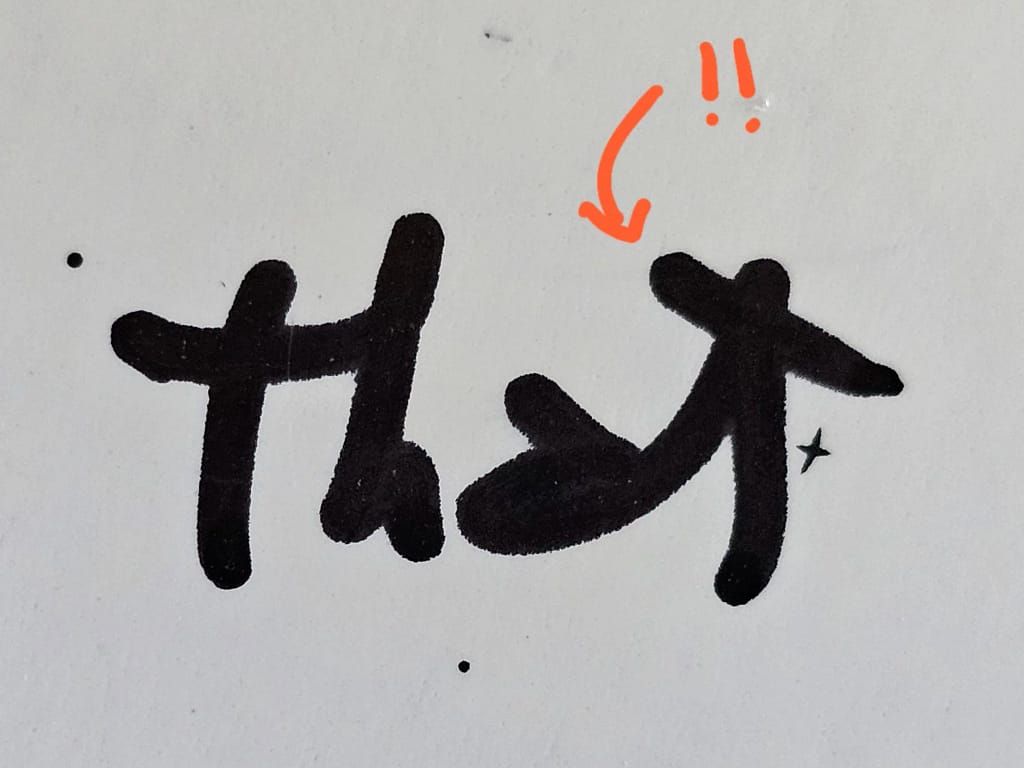
1 high, downward t-bars common in writers who project their insecurity & frustration in life onto others by exerting control.

2 fully capitalized writing with rigid strokes and angularity, common in writers whose sense of uncertainty in life may be projected by trying to control others.
Self-inflicted frustration: seen in pessimistic ‘t’-bars that droop down, turning anger inward in a cycle of self-destruction.
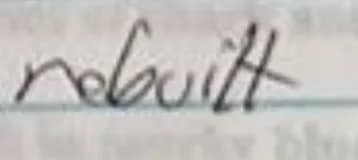
low ‘t’-bars that droop downwards (rightward decline) are common among writers who redirect external frustration inwards. (sample from Bo Burnam)
Repressed expression: visible in cramped, looped communication letters (like ‘o’ and ‘a’) that hold back anger and frustration you’re too scared to voice out

inner loop within letter ‘a’. a common sign of mental filtering. these writers may let anger fester inside their before they implode.
Anger is an unavoidable part of a life fully lived. When we suppress it, we allow it to morph into self-destructive or externally destructive tendencies. We waste an opportunity to harness it as a divine tool for the expansion of our energy and expression.
How to Transmute Rage into a Catalyst for Change
Anger is multifaceted. It will not get easier to understand the more you push it back into the shadows, and it will not simply disappear. To move through it means to harness it with clear-cut intention.
1. Practice Intentional Destruction.
Unfiltered rage is a nuclear bomb; it can destroy healthy relationships and goals in its flurry. But anger that has been processed and clarified becomes a scalpel.
Use it to cut through the relationships you know are not good for you. (especially that one you’re scared to let go of.)
Wield it to destroy the internal beliefs holding you hostage without mercy.
2. Rebuild from the Ashes.
Rebuilding is an uncomfortable process. This is why so many have “failed dreams”, but so few have actually tried.
Sacred anger is the channel that forces your brilliance out of your abstract mind and into reality.
Every time you hear that voice saying, “This isn’t going to work,” “I’m not good enough”, let your anger protect you.
Pivot your strategy. Do the thing you’ve always known you should do but were too scared to try.
Speak. Create. Anger is one of the most energetic emotions. When you know you can do hard things, this energy doesn’t paralyze you—it forces you to tear your own walls down and fully express the potential you’ve been hiding.
A Self-Construction Exercise: Rewire Through Your Handwriting
Your handwriting is a direct map of your subconscious patterns. Here’s how to start rewriting the code of suppression:
If you feel too scared to voice your thoughts: Focus on opening the ovals of your communication letters (like ‘a’, ‘o’, ‘d’, ‘g’). Practice writing them with clear, open spaces inside. This physically practices the act of open expression.
If you suppress your thoughts because they scare you: Identify and remove the inner loops in those same letters. These loops often represent secrets, things held back, or internalized fear. Writing them without the loop is a declaration that you will no longer hide your truth.
If you externalize your need for control: rewrite these same traits in your letter “t” or over-capitalization. Soften your strokes into a stable pattern. This practices self-assuredness and recenters your need for clear structure inward.
Anger is not shameful. It is a divine, clarifying tool. Its role is not to make you uncomfortable, but to liberate you, especially from yourself.